Tuesday, June 21, 2011

Sunscreen safety and new FDA rulings


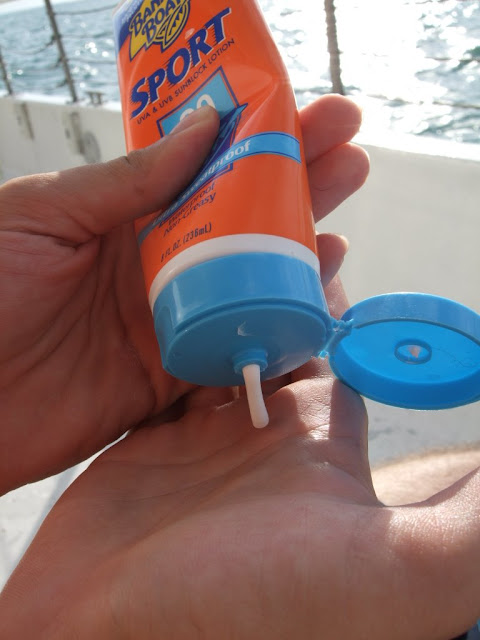
Earlier this month the FDA finally produced a report that was promised over 30 years ago, talking about the safety and recommendations for sunscreen products and their labeling and active ingredients. Unfortunately, it looks like the rulings are a little bit on the slack side when it comes to ingredient safety, as they simply gave a blanket ruling that current sunscreen ingredients are safe.

We know this to be somewhat untrue, as there are significant free-radical and hormone disruptor concerns with several VERY common ingredients. In fact, one major set of studies done by the Environmental Working Group has shown that as many as 65% of the sunscreen products on the market today contain a very harmful ingredient, oxybenzone. Oxybenzone can cause allergic reactions, is a potential hormone disruptor and penetrates the skin in relatively large quantities.

The major upside to the new FDA rulings are in the revised labeling and testing standards they have added. Major companies have 1 year to implement the new standards which will completely disallow terms like "waterproof" "sweatproof" and "sunblock" as these claims are impossible, and lead to consumer misuse of the products. They will also not allow any sunscreen product to claim a length of use of more than two hours without re-application.

Also, testing will be required to demonstrate the products ability to use the term "multi-spectrum" which indicates that they are covering both UVA and UVB wavelengths. UVB is the primary protection provided by the SPF term, which stands for Sun Protection Factor. UVB rays cause sunburns. UVA spectrum rays are the ones responsible for skin cancers and long term aging damage to the skin. Both are really needed to be safe in the sun.

For those of you who would rather not apply toxins or estrogen disrupting compounds to your skin, there are some products and ingredients that are much safer. Look for products that DO NOT contain Oxybenzone, but one of the safer compounds like Avobenzone (3% is the recommended safe level). The other way to go is with a mineral based creme, like titanium oxide or zinc oxide.

In the 1980s, titanium or zinc oxide products were a thick white creme that many people would not tolerate. Today, most mineral sunscreen products use nanoparticle form of the minerals that go on almost clear. The safety studies on nano-sized titanium and zinc are showing that there are very low levels of absorption into the skin, and the UVA/UVB safety levels are so good that its worth that low risk.

For information on sunscreen products and their ingredients you can visit the EWG's 2011 Sun Safety site

The EWG also maintains a general product safety database that you should be aware of called Skin Deep. Skin Deep contains thousands of personal care products and safety ratings on them and their active ingredients. Check it out, it can help you with your safety choices when it comes to the stuff you smear on your body, face and children.

Wednesday, June 15, 2011

Finally, some national level guidelines on Formaldehyde, the carcinogen!


The state of Washington has had laws on the books about formaldehyde for some time, but at the national level we have lagged behind. Just updated, the U.S. Department of Health and Human Services released the 12th Report on Carcinogens on June 10, 2011. This report officially classifies Formaldehyde as a human carcinogen.

Most people think of formaldehyde as a preservative used in the embalming process (yeah, that's for dead people), but the astonishing fact about this deadly chemical is that it is present in a simply mind boggling number of our personal care products, lotions, shampoos, conditioners, baby products, and beauty products!

I personally am very careful about what products and manufacturers I choose for my home and body. Pay close attention to the labels, and actually look up some of the ingredients on the internet. You will find names like Quaternium 15, which is one of more than 35 different industry names for Formaldehyde. Here is a list, not necessarily a complete one, of some other trade names you will find in your products that are actually just formaldehyde in disguise.

Synonyms, Trade names: Formic acid aldehyde, formalin, methyl aldehyde, oxomethane, methyleneoxide, oxymethylene, formyl hydrate, Formol, Fannoform, BFV, Formalith, Ivalon, Lysoform, Morbicid, Superslysoform, Tannosynt, Antverruc, Sandovac, Vobaderin

If you know of others, please feel free to comment and include the trade name and the product you found it in. I am so glad there is finally a federal establishment recognizing this cancer causing substance as dangerous. Stand with me in refusing to use products that contain cancer!

For something YOU can do to help, check the link on the right to the Safer Chemicals, Healthy Families organization. They are supporting the Safer Chemicals Act of 2010, which is fighting for stronger laws to support the safety of our consumer products.

Friday, June 10, 2011

Charcoal and grilling, well-done with extra cancer please!


A good friend was recently trying to decide on his barbeque method of choice. He preferred the taste of charcoal, but I suggested the ease of propane was the way to go.

He eventually went with propane, but not because it is easier. It turns out that charcoal cooking is directly linked to a few carcinogenic substances from flare-ups that splatter on the meat. They are called polycyclic aromatic hydrocarbons, and they are associated with higher risks of stomach cancer. In addition to the problems caused by charcoal, it turns out there are large health risks with cooking meat in many different methods.

This prompted me to research what all of this is about. First off, red meat consumption has been linked to higher levels of stomach and gastrointestinal cancer. This isn’t news exactly, but the reasons for it are related to compounds called heterocyclic amines (HCA), which are produced during the cooking of meat.

Heterocyclic amines are mutagenic and are classified as carcinogens. It is now widely accepted that exposure to these meat carcinogens and HCAs increases the risk of human cancer. In fact the research supporting this connection has been published and verified for YEARS. It’s OLD news. But still, we continue to cook our red meat over charcoal as if we were immortal, as if cancer was someone else’s problem.

There are 4 primary factors in the production of HCA from cooking meat.
- Type of meat
- Level of heat
- Cooking method
- Cooking time

The biggest factor seems to be high temperature cooking. Some studies are showing as much as a 3x increase in HCA production just by doing something as simple as increasing from 200° degrees to 250°, even when cooking for a shorter period.

The next biggest is cooking time. Using the same heat level, but habitually extending the cooking time from Rare or MR to Well Done can increase the risk of stomach cancer by triple! Even meats cooked using relatively safer techniques like baking or pan frying have higher levels of HCA when cooked to “welldone” status.

BBQ, broiling and deepfrying are some of the most “dangerous” methods of meat cooking. Baking and pan frying produce fewer HCA, even at the same temp levels. Stewing and boiling and poaching are done at or below 100°C and produce significantly fewer HCA.

What can we do about it?
Well, for starters, stop using charcoal grills. The additional cancer risks are simply not worth it, not to mention the fact that they release those same hydrocarbons into the atmosphere. Many of us are attempting to reduce our carbon footprint, and eliminating charcoal grilling is a great step for that.

Next, rethink your stance on welldone meats. The small risk of a food bourne illness such as food poisoning or ecoli is a small one compared to the long term tripling of stomach cancer risk. Make sure the internal temperature of the meat rises to the recommended safe cooking temp, but don’t let it stay longer.

Some studies have shown that microwaving the meats before grilling can kill some of the mutagenic precursors, reducing the HCA production when they are finally grilled. In fact, meat that was microwaved for 2 minutes prior to grilling showed a 90% reduction in HCA.
Since HCAs are mutagenics, they can be combatted with anti-oxidants. Using a marinade with ingredients such as cherries, garlic, virgin olive oil, and things that are high in anti-oxidants like wines and grape seed extracts can reduce the HCA production as well. But not traditional BBQ sauces, with their tomato solids and sugars, they seem to INCREASE HCA production.

Other techniques suggested by the USDA include removing visible fat before grilling and cutting off charred portions before serving.

To date, no formal studies have been done to establish daily recommended safe levels of HCA consumption. The cautious and health conscious person will want to limit them as much as possible, as much as we try to prevent other forms of carcinogens from entering our bodies.

Tuesday, June 7, 2011

Massive corporate coverup? you decide.


FOR HIRE: Child Poisoner!

JOB OPPORTUNITY: Toxic Waste Dumper

WANTED IMMEDIATE OPENING: Landfill Abuser

MULTIPLE POSITIONS AVAILABLE: Disease Spreader, Agent of Illness

You have probably never seen job postings like the ones above. What awful jobs! Who would even want them? The terrible social stigma of accepting such a position would likely scare good law abiding folk to death. Even an evil person that might seek out the job of “Toxic Waste Dumper” would hide it, and/or want huge sums of payment to compensate their wrecked consciences.

But what if I were to tell you there are many people filling all of these roles today? What if millions of people were being fooled into accepting these positions unwillingly? What if major corporations in America have found a legal way to offload these responsibilities to people all over the country?

Every day these unwitting agents dispose of toxic materials in their own communities, their own homes and workplaces. These legally duped people poison themselves, their families, and their co-workers, most of whom are also taken up in this complicated scheme of environmentally disastrous chicanery. And they are not paid huge conscience soothing salaries to do so.

If fact, they do it because they have been deceived and brainwashed. These huge corporations spend billions of dollars each year to recruit new agents to this program, to increase the rate at which these materials are distributed and disposed, to continue the propaganda that allows these programs of environmental destruction to continue unabated. Plainly speaking, this is a profit center for these immense companies! They make billions of dollars from the very people who are absorbing their toxins, distributing the corporate waste, consuming their poisons and filling local landfills with non-biodegradable waste collected from around the globe.

So… why? How can this be legal, the reader should be asking themselves? How can companies profit from such a massive national campaign of toxicity and mayhem?

The simple fact is that these companies are not dodging laws, not breaking laws, not doing anything illegal whatsoever. In fact the “unwitting agents” are nothing of the sort.

These people are conscious and purposeful consumers of products from major international corporations like Johnson and Johnson, Proctor and Gamble, Lever Brothers, a large number of cosmetics companies and a massive cast of others. The toxins? Just ingredients as far as the law is concerned.

The current legislation that protects customers and consumers of these products is almost non-existent. There are over 80,000 chemicals and compounds being utilized in personal care, cleaning and cosmetics products we as Americans consume, and fewer than 20% of them have ever been tested for safety. Some of them are known carcinogens, reproductive or neuro-toxins, or linked to respiratory diseases like asthma, yet since they don’t have to prove they are safe, we the American people are the test monkeys. Current law requires that chemicals be proven to be unsafe before they are legally restricted, and the burden of that proof lies on the FDA and EPA and the public.
With hazardous chemicals, it should be guilty until proven safe, not the other way around. And to be perfectly frank part of the responsibility for this problem lies firmly on our own shoulders. We need to act more carefully, and choose to purchase our products from companies with a proven track record of environmental stewardship and corporate responsibility. Know what the ingredients in your products are, and what they are doing to you and your families. Often ingredients will be listed under a “trade name”, which is just another name for a harmful ingredient that you may not immediately recognize. For example, the chemical formaldehyde is sold under at least 30 different trade names, and is a VERY common ingredient in shampoos, conditioners, lotions and even BABY products. Yet formaldehyde has been shown to be a carcinogen. A carcinogen in products targeted for babies? You better believe it.

Don’t fall for advertising claims whose sole purpose is to make you buy their product. Even products that are supposedly “green” or “natural” or “organic” may not be! Those words have no legal binding on a product label, unless they are backed by a known and scientifically proven claim.

Often “Green” products, (sometimes even accurately labeled ones!) are produced by a different division in that same huge corporation that is harming the environment with their old product line. Don’t give your support to a company that sells safe and unsafe products of the same type. Buy from companies that specialize and only sell safe products produced sustainably and with environmental impacts in mind.


And now to promote a few great sites and initiatives.

First, the Safe Chemicals, Healthy Families coalition(permanent link on the right). Recently they have been joined by Jessica Alba as they champion the cause of safer chemicals and product safety. They are promoting the 2011 Safer Chemicals Act, which seeks to bring stronger legislation in place to protect consumers from known harmful chemicals and enforce testing requirements on current and future chemicals and compounds used in our products.

Next, The Story of Stuff(see links on the right). This site has a series of short films about the consumer product lifecycle, and how “stuff” is made, consumed and disposed of. I especially recommend the films “The Story of Stuff” and “The Story of Cosmetics” for product safety information. There is now a book by the same name, which goes to a greater depth of detail about the materials and manufacturing product lifecycle from raw materials to the dump.